

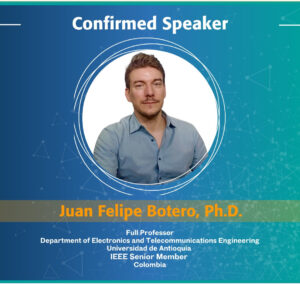
Wednesday, 13:45 to 14:45
Aula Máxima de Ciencias
Title: Programmable networks: History and Perspectives
Abstract: Traditional computer networks have long suffered from «ossification» due to the tight vertical integration of control and data planes within closed, proprietary hardware, a rigidity that hinders rapid innovation. This presentation shows how the advent of Software-Defined Networking (SDN) revolutionized this model by decoupling the control plane from the underlying data plane, enabling logically centralized network management and open interfaces. Building on the foundations of SDN, the evolution toward data plane programmability—driven by the P4 programming language and the Protocol-Independent Switch Architecture (PISA)—allows operators to define exact packet parsing and processing behaviors independently of specific network protocols or target hardware. This presentation shows how this extreme flexibility unlocks novel capabilities at line rate, such as In-Network Machine Learning, which offloads complex tasks like training gradient aggregation and model inference directly into programmable switches and SmartNICs to reduce latency and bandwidth bottlenecks. Additionally, the presentation details how programmable data planes empower robust cybersecurity defenses, mitigating both volumetric (e.g., DDoS) and non-volumetric attacks at Terabit speeds directly within the network infrastructure. Finally, we show how these software-defined architectures serve as a critical pillar for 5G and 6G cellular networks, facilitating the dynamic orchestration of radio resources, mobility management, and interference mitigation required by ultra-dense environments.
Bio: Dr. Juan Felipe Botero is an Full Professor of the University of Antioquia, Colombia. In 2006 he received his Computer Science Degree from the University of Antioquia, Colombia, and the M.Sc. degree in Telematics Engineering in 2008 from the telematics department of the Technical University of Catalonia, UPC, in Barcelona, Spain. In 2013 he received the Ph.D. degree in Telematics Engineering also from the Network Engineering Department of the Technical University of Catalonia, UPC. In 2008, he joined the Design, modelling and evaluation of broadband networks group in the Telematics Engineering Department getting in 2013 his Ph.D degree. His main research interests include Internet of the Future, in particular Network Virtualization, Mathematical Programming, Routing, Energy Efficiency and Network flows. His current work is devoted to the study of the resource allocation problem in a network virtualization environment, also known as Virtual Network Embedding and the energy savings in data centres by means of Green Service Level Agreements (GreenSLAs).
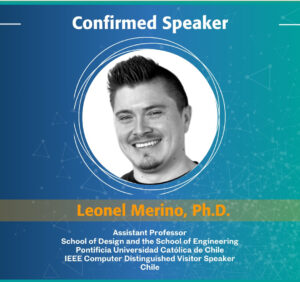
Thursday, 9:15 – 10:15
Aula Máxima de Ciencias
Title: From data to the metaverse: Designing secure user-centered immersive experiences
Abstract: The metaverse promises to transform digital interaction through immersive, persistent, and social environments. However, its development raises fundamental challenges regarding security, privacy, interaction, and user evaluation. This talk presents an integrated vision ranging from data visualization and human-computer interaction to XR experience design, incorporating evidence from recent systematic reviews on security and authentication in the metaverse. Trends, research gaps, and opportunities for designing reliable, usable, and ethically responsible immersive systems are discussed.
.
Bio: Leonel Merino has been an Assistant Professor of Engineering Design at the School of Design and the Faculty of Engineering of the Pontifical Catholic University of Chile since 2021. He is part of the Design Engineering Lab. He served as a Postdoctoral Researcher at VISUS, Universität Stuttgart (2018–2021) and has been on the steering committee of the VISSOFT conference since 2020. His research focuses on virtual/augmented reality, software engineering, human-computer interaction, and data visualization. He earned his Ph.D. from Universität Bern (2018) after working at the Software Composition Group, and previously worked as a Project Engineer at ENTEL (2009–2014). He holds a Master’s from the EMOOSE program (2008) and a Civil Engineering degree in Computer Science from the University of Chile (2006).
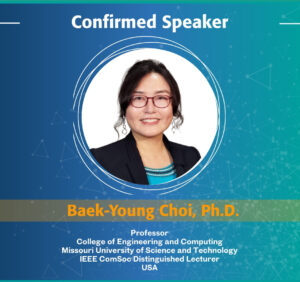
Friday, 9:15 – 10:15
Aula Máxima de Ciencias
Title: AI-Native Network Management: From Automation to Autonomous Intelligence
Abstract: Abstract:Artificial intelligence is rapidly transforming how communication networks are designed, operated, and optimized. While today’s AI-assisted network management solutions primarily support human operators through prediction, anomaly detection, and decision support, the next generation of communication systems demands a fundamentally different paradigm—AI-native network management. In this vision, AI is not an add-on component but an integral part of the network architecture, enabling continuous observation, reasoning, planning, and autonomous control across heterogeneous and large-scale infrastructures. This keynote reviews the evolution of network management from traditional rule-based systems to data-driven automation and AI-native intelligence. It discusses recent advances in AI-assisted network management, illustrating how these technologies enable more adaptive, resilient, and self-managing networks toward AI-native network management. The talk also examines key research challenges, including trustworthiness, explainability, safety, scalability, interoperability, and human-AI collaboration. Finally, it outlines future research directions toward realizing fully autonomous communication networks that can efficiently support emerging 6G services and beyond.
.
Bio: Dr. Baek-Young Choi is a Professor of Computer Science in the School of Science and Engineering at the University of Missouri – Kansas City (UMKC). She received her Ph.D. degree in Computer Science and Engineering from the University of Minnesota, Twin Cities.
Her research interests generally lie in the broad area of networking and communications, with specific emphasis on Internet-of-Things, software-defined networking, cybersecurity, and smart city technologies. She published five books on network monitoring, storage systems, cloud computing and Internet of Things. She has been a faculty fellow of the National Aeronautics and Space Administration (NASA), U.S. Air Force Research Laboratory’s Visiting Faculty Research Program (AFRL-VFRP) and Korea Telecom’s – Advance Institute of Technology (KT-AIT).
She has served as an associate editor for a number of journals, including IEEE Internet-of-Things Journal, Elsevier Journal Computer Networks, Springer Journal of Telecommunication Systems, and IEEE Consumer Electronics Magazine. Her works received multiple Best Paper awards as well as Best Video and Best Poster awards. She has delivered keynotes and tutorials, and served as a general chair, technical program co-chair, and many other organizational committees for many conferences and workshops.
She is a senior member of ACM and IEEE, and was a Chair of Women in Communications Engineering (WICE) in the IEEE Communications Society (ComSoc) (2022-23). Currently, she is an IEEE ComSoc Distinguished Lecturer, Associate Editor-in-Chief of IEEE Communications Magazine, the Chair of the IEEE ComSoc Sister & Related Societies Committee, and a member of IEEE ComSoc GLOBECOM/ICC Technical Content and Financial Committees.